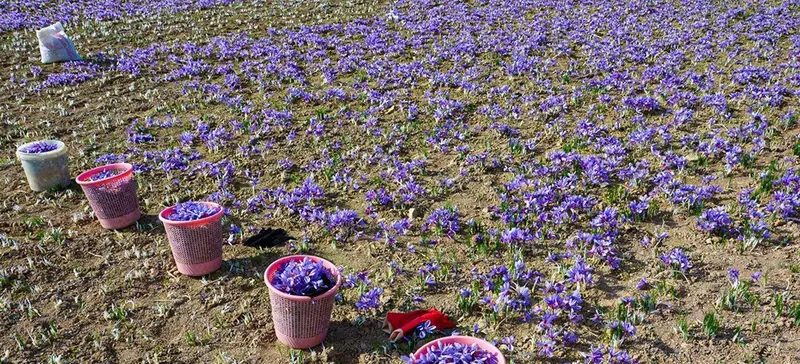
The red gold of Persia.
Iran produces the vast majority of the world's saffron. Nena Saffron brings the finest of that harvest — hand-picked in Khorasan and graded to ISO 3632 — to importers, food manufacturers and luxury brands worldwide.
The world's most precious spice, handled with precision.
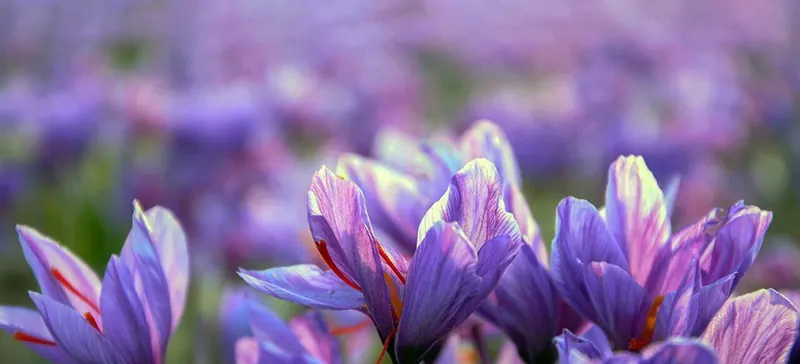
Every gram of saffron requires roughly 150 hand-picked flowers. That rarity demands an exporter who protects quality at every step — from the field to the final seal.
We source directly from the saffron heartland of Khorasan, process in hygienic facilities, test every batch for colour, aroma and flavour strength, and pack to each client's specification, from bulk to luxury retail.
From the crocus field to the jar.
Saffron grades.
| Grade | Description | Ideal for |
|---|---|---|
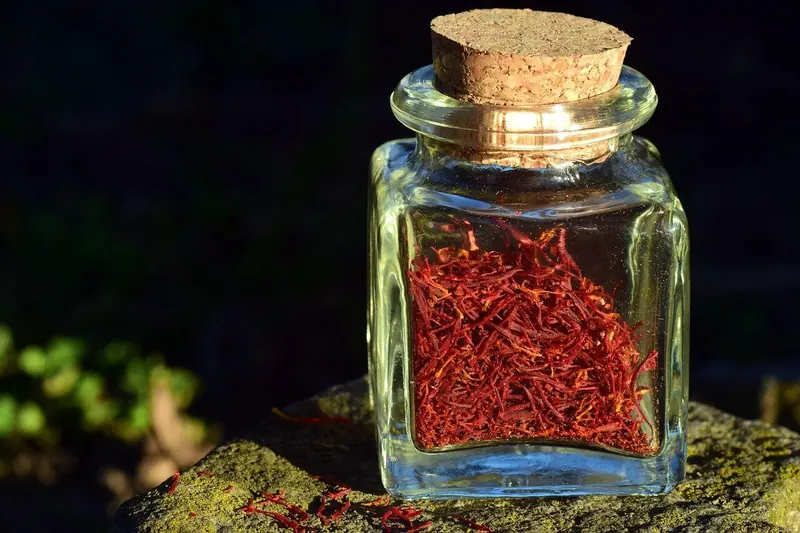
| Super Negin | DescriptionLong, thick, pure red stigmas, cut and separated — the highest grade | Ideal forLuxury retail and gifting |
| Negin | DescriptionPure red stigmas with exceptional colour strength | Ideal forGourmet retail, fine dining |
| Sargol | DescriptionAll-red stigma tips, no style, intense colour | Ideal forRetail and food service |
| Pushal | DescriptionRed stigmas with a small portion of yellow style | Ideal forFood industry and wholesale |
| Bunch (Dasteh) | DescriptionWhole threads tied in bunches, stigma and style | Ideal forTraditional markets |
ISO 3632 — what we measure
- Colouring strength (crocin)
- Measured at 440 nm — the key grading figure
- Bitterness (picrocrocin)
- Measured at 257 nm
- Aroma (safranal)
- Measured at 330 nm
- Moisture
- Maximum 12% for threads
- Classification
- Categories I to III — Category I is the highest
- Documents
- Certificate of analysis for every batch
Indicative values. Final specifications are agreed in each contract.
Built around our customers.
Importers & spice houses
Graded bulk saffron with consistent colour strength, season after season.
Food manufacturers
Saffron for ice cream, confectionery, rice dishes, beverages and ready meals.
Gourmet & luxury brands
Super Negin and Negin in premium tins, jars and gift packaging.
Hotels, restaurants & catering
Reliable supply in practical formats for professional kitchens.
What we deliver.
Direct sourcing
Long-term partnerships with farming cooperatives in Torbat-e Heydarieh, Qaen and surrounding regions.
Laboratory grading
Crocin (colour), picrocrocin (taste) and safranal (aroma) measured on every batch to ISO 3632.
Food safety
Hygienic processing, moisture control and contaminant testing for demanding export markets.
Private label
Tins, jars and gift packaging designed for retail, gourmet and luxury brands.
Global export
Secure, insured air and sea shipments with complete export documentation.
Trade partnerships
Supply programmes for importers, spice houses, food manufacturers and the HoReCa sector.
Khorasan: where the world's saffron grows.
Iran produces roughly nine out of every ten grams of saffron consumed in the world. Almost all of it is grown in the provinces of Khorasan Razavi and South Khorasan, where cold winters, hot dry summers and centuries of know-how create ideal conditions for Crocus sativus.
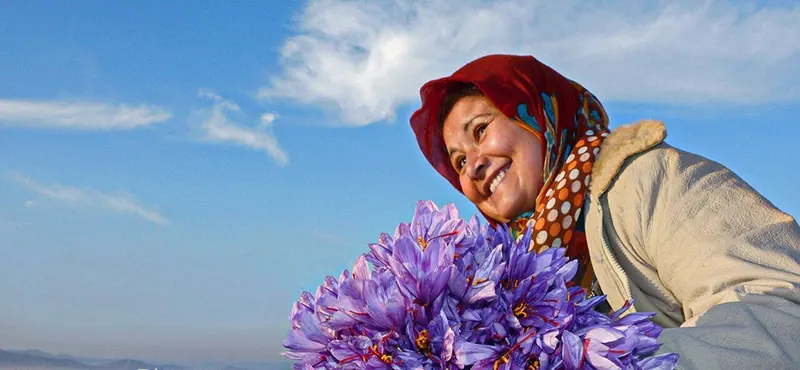
The harvest lasts only a few weeks, from late October to late November. Each flower is picked by hand at dawn, before it opens fully, and its three crimson stigmas are separated by hand the same day — often by families who have tended the same fields for generations. Around 150,000 flowers are needed for a single kilogram of dried saffron.
Towns such as Torbat-e Heydarieh, Gonabad and Qaen are names every serious saffron buyer knows. Mashhad, the region's capital, is the centre of processing, grading and export.
Nena Saffron works directly with growers' cooperatives and processors in this region, securing harvest volumes in advance and controlling drying, grading and packing to deliver consistent quality to markets including Europe, the Gulf, East Asia and North America.
The saffron heartland
- Torbat-e HeydariehWidely called the saffron capital of the world
- GonabadFields irrigated by ancient qanat systems
- Qaen, South KhorasanRenowned for saffron of exceptional colour strength
- MashhadProcessing, grading and export hub
Map
The saffron heartland of Khorasan.
- Main saffron belt
- Smaller producing provinces
- Saffron fields
- Steel / processing plant
- Nena Holding HQ
- Export route via Tehran
- Torbat-e HeydariehWidely called the saffron capital of the world
- GonabadFields irrigated by ancient qanats
- QaenSaffron of exceptional colour strength
- MashhadProcessing, grading and export hub
A rigorous process, end to end.
Harvest
Flowers are hand-picked at dawn during the brief autumn bloom.
Separate & dry
Stigmas are separated by hand and carefully dried to lock in quality.
Grade & test
Batches are graded and laboratory-tested to ISO 3632 parameters.
Pack & export
Packed under hygienic conditions and shipped with full documentation.
Colour, aroma and flavour — measured, not promised.
We provide a certificate of analysis with every batch, so our partners know exactly what they are buying.
- Certificate of analysis for every export batch
- ISO 3632 Category I grades available
- Custom packaging from 1 g retail to bulk export cartons
- Consistent year-round supply backed by secured harvest volumes
Questions buyers often ask.
Which saffron grades do you export?
Super Negin, Negin, Sargol, Pushal and Bunch (Dasteh), each graded by laboratory analysis.
How is quality certified?
Every batch is tested to ISO 3632 for colour, taste, aroma and moisture, and shipped with its certificate of analysis.
Which packaging formats are available?
From 1 g retail packs to bulk export cartons, including tins, jars and gift packaging, with private label on request.
Can I see samples before ordering?
Contact our team to discuss samples, specifications and certificates before a first order.
When is saffron harvested?
The harvest runs from late October to late November. Secured harvest volumes allow us to supply throughout the year.
Work with Nena Saffron.
Tell us what you need and our team will come back to you with a tailored proposal.
To speed up your request, include
- Grade required
- Quantity and packaging
- Destination country
- Certification requirements
How to store and ship Persian saffron without losing quality
Light, moisture, heat and air are saffron's four enemies. How to pack, store and ship it so colour and aroma arrive intact.
Read the guide