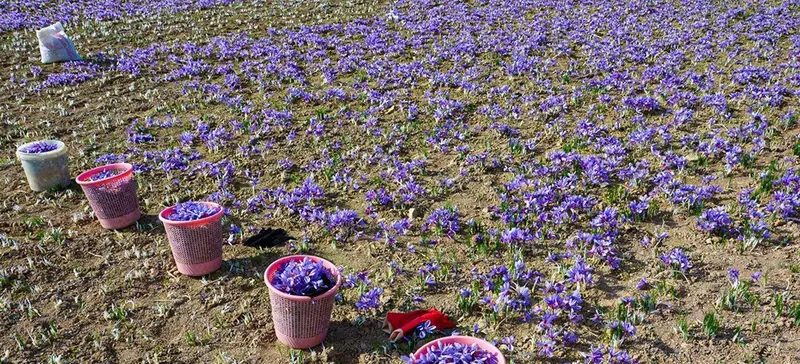
Saffron is one of the most valuable foods by weight, and its value lies almost entirely in three compounds: crocin, which gives colour; picrocrocin, which gives taste; and safranal, which gives aroma. All three degrade over time. Good storage and shipping practices decide whether a buyer receives the grade they paid for.
Saffron's four enemies
- Light — ultraviolet and strong daylight break down crocin, so the colour strength measured in the laboratory falls.
- Moisture — damp saffron loses aroma, clumps and becomes vulnerable to mould.
- Heat — high temperatures speed up every form of degradation, especially the loss of safranal.
- Air — oxygen gradually dulls both colour and aroma once a container has been opened.
Packaging that protects
The best packaging is airtight, opaque or tinted, and sized so that the saffron is used soon after opening. Retail saffron is usually packed in small glass jars, metal tins or sealed acrylic boxes inside a printed sleeve. For wholesale lots, multi-layer foil pouches, often vacuum-sealed or nitrogen-flushed, keep air and moisture out during long journeys.
Whatever the format, every pack should carry the grade, net weight, crop year, packing date, best-before date and lot number, so that the product can be traced back to a specific laboratory analysis.
Storing saffron correctly
- Keep it in a cool, dry and dark place, away from ovens, windows and direct sunlight.
- Avoid the refrigerator for opened packs: moving them in and out creates condensation.
- Store saffron away from strong-smelling products, as it readily absorbs other aromas.
- Reseal containers immediately after use and avoid touching the threads with wet hands or utensils.
Stored this way, saffron keeps its quality well; producers commonly give a best-before date of two to three years from packing. Colour and aroma do decline gradually, so buyers should rotate stock on a first-in, first-out basis.
Shipping saffron internationally
Because it is light and valuable, saffron usually travels by air freight, which keeps transit times short and limits exposure to heat and humidity. Cartons should be sealed, insulated where temperatures are high, and kept away from strong odours during transit. Insurance at full commercial value is standard practice.
Saffron is classified under HS code 0910.20. A typical export file includes a commercial invoice, packing list, certificate of origin, phytosanitary certificate and an ISO 3632 laboratory report for each lot. Some destination markets also require health certificates or specific labelling in the local language.
A buyer's checklist
- Ask for an ISO 3632 report that matches the lot number printed on the packs.
- Check packing date, crop year and best-before date before accepting delivery.
- Confirm packaging type, seal and moisture protection in the contract.
- Agree on transport mode, Incoterms and insurance in advance.
- On arrival, store the goods immediately in a cool, dry and dark place.
Nena Saffron grades, packs and ships Persian saffron from Khorasan with laboratory testing and full lot traceability, in formats from retail jars to bulk pouches.