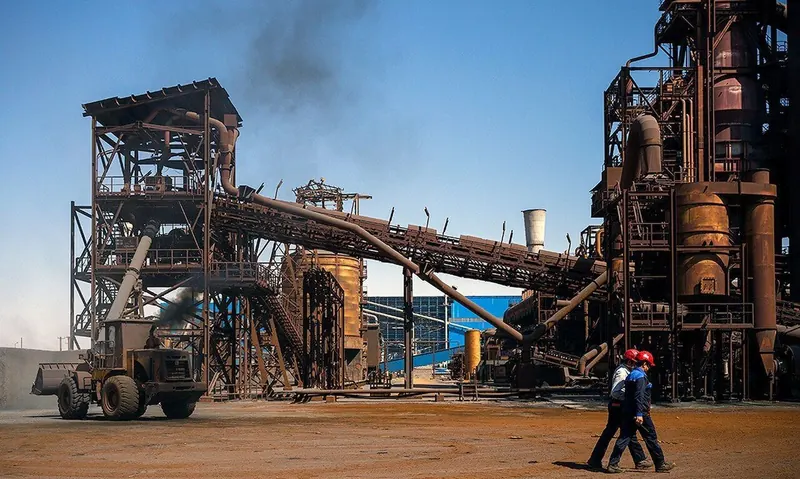
Globally, most steel is still made in blast furnaces, which use coking coal to turn iron ore into molten iron. Iran has taken a different path. With some of the largest natural gas reserves in the world, the country produces most of its steel through direct reduction, and it has become one of the leading producers of direct reduced iron (DRI) anywhere.
From ore to pellets
The process begins at the mine. Iron ore is crushed and concentrated to raise its iron content, then rolled into small, hard pellets. Pellet quality matters: a high iron content and low levels of impurities such as silica and phosphorus lead directly to better steel and lower energy use further down the chain.
Reduction without melting
In a direct-reduction plant, pellets are fed into the top of a tall shaft furnace while a hot reducing gas, made by reforming natural gas into hydrogen and carbon monoxide, rises through them. The gas removes the oxygen from the ore without melting it. What comes out is direct reduced iron, also called sponge iron: a solid, porous product that typically contains over 90% metallic iron.
DRI and HBI
Freshly made DRI is reactive and can reoxidise or heat up if it gets wet, which makes it delicate to store and ship. For transport over long distances, it is often compressed while still hot into dense briquettes known as hot briquetted iron (HBI), which is far more stable.
From iron to steel
DRI and HBI are then melted, usually together with scrap, in electric arc furnaces, refined into steel and cast into billets, blooms or slabs before rolling into finished products such as rebar, sections and sheet.
Why it matters for buyers
- Lower emissions: replacing coal with natural gas cuts the carbon footprint compared with the blast-furnace route.
- Purity: DRI-based steel contains fewer residual elements than steel made mostly from scrap, which suits demanding grades.
- A path to hydrogen: the same shaft furnaces can increasingly run on hydrogen, the route towards near-zero-carbon steel.
Nena Steel & Mining works along this chain, from iron ore and pellets to iron ingots, billets and finished steel, with documented analysis for every shipment.