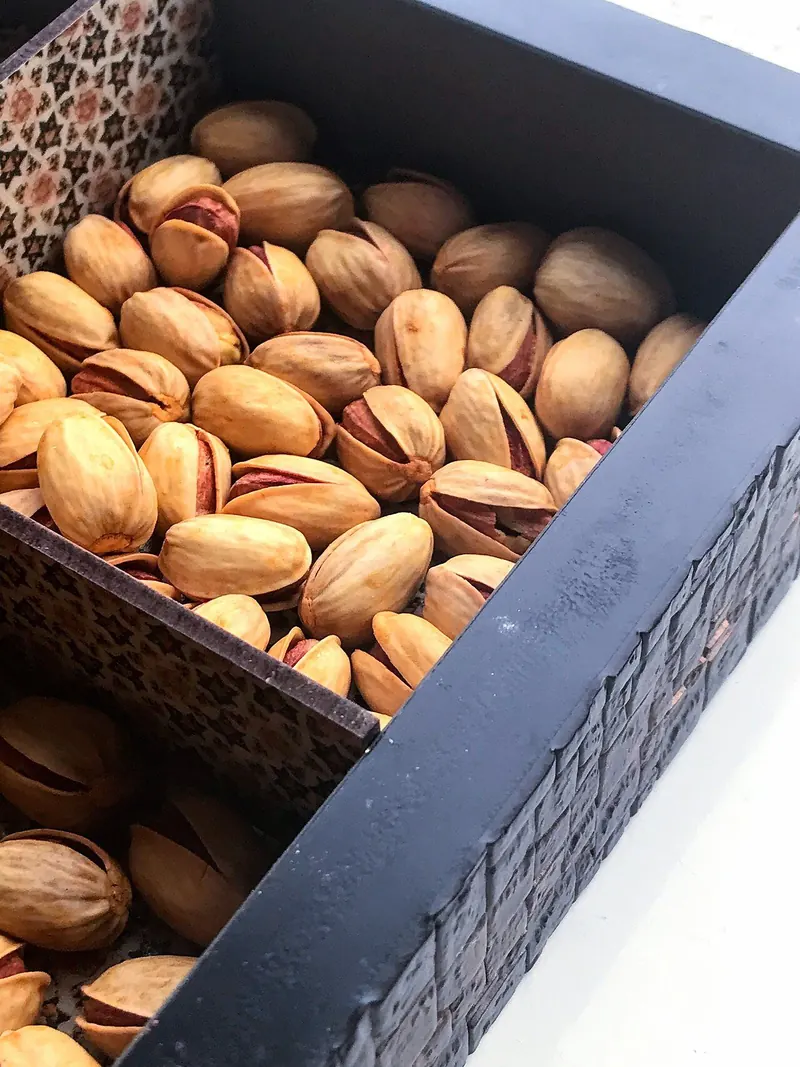
Pistachios and dates are among Iran's oldest and best-known exports. Both come in distinct regional varieties with their own shape, taste and shelf life, and both are traded on specifications that every importer should understand before signing a contract.
Pistachio varieties
Most Iranian pistachios are grown around Kerman and Rafsanjan, with further orchards in Khorasan, Yazd and Semnan. Four varieties dominate the export market.
- Akbari — long, large nuts with a premium appearance; among the most expensive Iranian varieties.
- Ahmad Aghaei — long nuts with a light shell and a notably green kernel, popular with retailers.
- Kalleh Ghouchi — round, jumbo nuts with a rich flavour, much in demand for snacking.
- Fandoghi — small, round nuts and the most widely produced variety, valued for its price and flavour.
How pistachios are graded
Pistachios are graded by size, expressed as the number of nuts per ounce: the lower the count, the larger the nut. Buyers also specify the proportion of naturally opened shells, the moisture content, the share of closed or defective nuts and whether the product is raw, roasted or salted.
For food safety, aflatoxin control is essential. Major importing markets such as the European Union apply strict limits, so every lot should be tested by an accredited laboratory before shipment.
Date varieties
Iran is one of the world's largest date producers, with groves stretching from Kerman and Sistan-Baluchestan to Hormozgan, Bushehr and Khuzestan. Varieties differ above all by moisture, which determines how they must be stored and shipped.
- Mazafati — soft, dark and very sweet, from Bam and Jiroft; a fresh date that must travel under refrigeration.
- Piarom — semi-dry, with a thin dark skin and a caramel taste; grown mainly in Hormozgan and among the most prized Iranian dates.
- Zahedi — dry, golden and firm, with a long shelf life; well suited to wholesale and industrial use.
- Sayer (Stamaran) — semi-dry, from Khuzestan; widely traded in bulk and used for processing into paste and syrup.
What to specify in a contract
- Variety, grade or size, crop year and origin.
- Moisture, defect tolerances and, for pistachios, aflatoxin limits.
- Packaging, labelling and private-label requirements for the destination market.
- Incoterms, inspection by an independent third party, and phytosanitary and origin certificates.
Nena Food Trading sources pistachios and dates directly from growers and processors in Iran's leading regions, with pre-shipment inspection and full traceability for every lot.