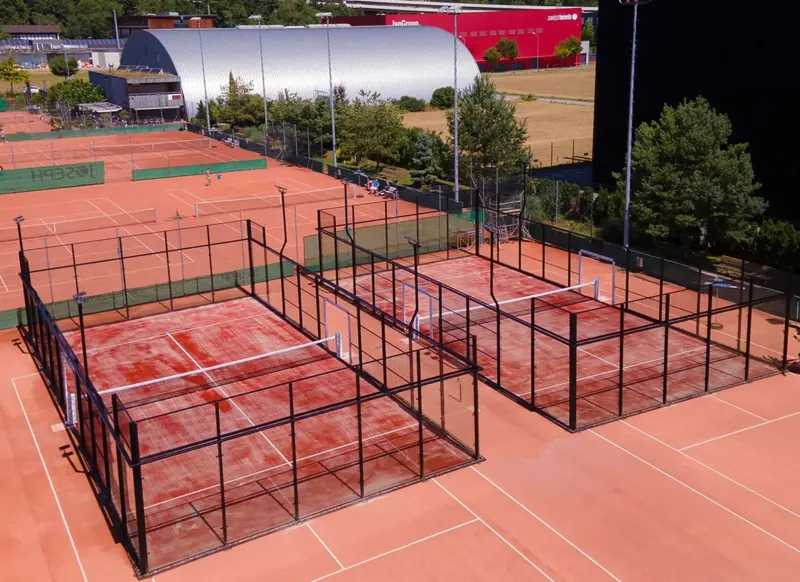
Padel is usually played in pairs, on an enclosed court smaller than a tennis court, and is easy to learn. That makes it social and accessible, and explains why so many new clubs have opened in recent years. But a club's income depends on one simple measure: how many of its court hours are actually booked. Evenings and weekends fill themselves; the rest of the week takes work.
Know your occupancy
The first step is to measure. Look at occupancy by day of the week and hour of the day, not just as a monthly average. Most clubs discover the same pattern: full evenings, busy weekends, and long gaps on weekday mornings and early afternoons. Those gaps are where growth comes from, and each needs its own answer.
Price by time slot
A single price for every hour leaves money on the table at peak times and keeps courts empty at quiet ones. Many clubs set different rates for morning, midday and evening, with a separate rate for weekends and public holidays. The aim is not to discount everything, but to give price-sensitive players, students and retirees a reason to play when courts would otherwise be free.
- A higher rate for evening and weekend slots, when demand exceeds supply.
- A lower rate for weekday mornings and early afternoons.
- Prepaid cards for regular players, valid for a set number of games.
- Occasional promotion codes for new players or quiet periods, with a clear end date.
Open games: four players, one booking
The biggest obstacle for many players is finding three others at the same level and time. Open games solve this: one player books a court and opens the game to others, who join and pay their share. Setting a minimum and maximum level keeps games balanced. For the club, open games turn individual players into full courts, and help newcomers build a network of partners.
Make booking effortless
Players book when the idea comes to them, often late in the evening and almost always on their phone. Online booking with live availability, instant confirmation and payment at the time of booking removes the back-and-forth of phone calls and messages. It also reduces no-shows, because a paid booking is a committed booking.
- Real-time availability over the coming days, visible to everyone.
- Payment online at booking, with the option for each player to pay their share.
- Automatic reminders before the game, and a clear cancellation policy.
- An alert when a full slot becomes free, so cancellations are filled quickly.
Bring players back
Coaching sessions, tournaments and regular social events turn occasional players into members of a community. Simple statistics, such as revenue by week, occupancy by hour and the most active players, show what is working and where to focus next.
A checklist for club managers
- Measure occupancy by day and hour every month.
- Set peak and off-peak prices, and review them each season.
- Promote open games to help players find partners.
- Take payment at booking and send reminders to reduce no-shows.
- Offer coaching and tournaments to build loyalty.
PadelTime, a start-up built by Nena, helps players in Iran find clubs and book courts online, and gives clubs the tools to manage schedules, pricing, open games, coaches and tournaments.