Between iron ore and the steel used on a building site lies a chain of intermediate products. Billets, blooms, slabs, pig iron and rebar are traded in large volumes across the Middle East, Asia and Africa, and each comes with its own vocabulary and specifications. Knowing them avoids costly misunderstandings in contracts.
Semi-finished steel: billets, blooms and slabs
Liquid steel from an electric arc furnace or a converter is solidified in a continuous caster into long, solid sections. These semi-finished products are named after their shape and size, which also determines what they will become.
- Billets — square sections, typically between about 100 and 200 millimetres a side, rolled into long products such as rebar, wire rod and merchant bars.
- Blooms — larger square or rectangular sections, used for heavy structural sections, rails and seamless tubes.
- Slabs — wide, flat rectangular sections, rolled into plate and hot-rolled coil for flat products.
Pig iron and iron ingots
Pig iron is the iron produced in a blast furnace, cast into small ingots that are easy to handle and ship. It contains more carbon than steel and is used as a clean, consistent raw material in electric arc furnaces and foundries, often alongside scrap and direct-reduced iron. Buyers specify it mainly by its content of carbon, silicon, manganese, phosphorus and sulphur.
Rebar: steel for concrete
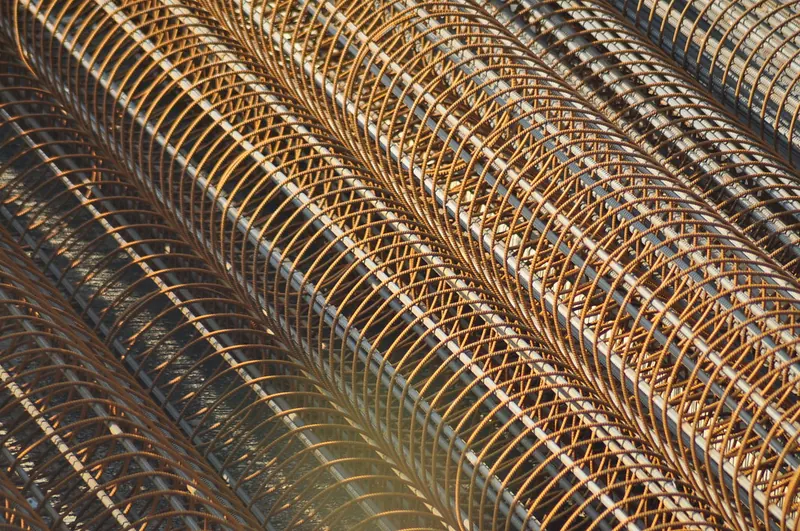
Reinforcing bar, or rebar, is hot-rolled from billets into round bars with raised ribs that grip the surrounding concrete. Rebar is sold by diameter, length and grade, and the grade is defined by a national or international standard.
- Grade — the minimum yield strength and ductility required, for example under ASTM A615 in the Americas, BS 4449 and EN-based standards in Europe and the Gulf, or ISIRI 3132 in Iran.
- Diameter and length — commonly 8 to 32 millimetres, delivered in straight bars of 12 metres or in coils for smaller sizes.
- Bundles and tags — bars are bundled and tagged with the mill, grade, size and heat number, so each bundle can be traced to its test results.
What to specify for billets
- Section size, length and dimensional tolerances, including straightness and corner radius.
- Steel grade and chemical composition, for example the widely traded 3SP and 5SP grades or an equivalent standard.
- Surface quality: free from cracks, laps, scale pockets and internal defects that would cause problems in rolling.
- Production route, such as electric arc furnace with continuous casting.
Certificates and inspection
Every lot should come with a mill test certificate showing the chemical analysis and, for rebar, the mechanical test results of each heat. Many buyers ask for an inspection certificate of type 3.1 under EN 10204 and appoint an independent inspection company to check quantity, dimensions, marking and sampling at loading.
Shipping and customs
Billets, pig iron and rebar usually travel as break-bulk cargo on bulk carriers, loaded directly into the hold or on deck. Rebar bundles must be protected against excessive rusting during long voyages. For customs, pig iron falls under HS heading 7201, semi-finished steel under 7207 and concrete reinforcing bars under 7214.20.
A buyer's checklist
- Product, standard and grade written out in full in the contract.
- Sizes, lengths, tolerances and packing or bundling method.
- Mill test certificates by heat number and the inspection arrangements at loading.
- Incoterms, port of loading, laycan and the documents required for customs clearance.
Nena Steel & Mining works along this chain, from iron ore and pellets to iron ingots, billets and finished steel, with documentation and inspection matched to each buyer's specifications.