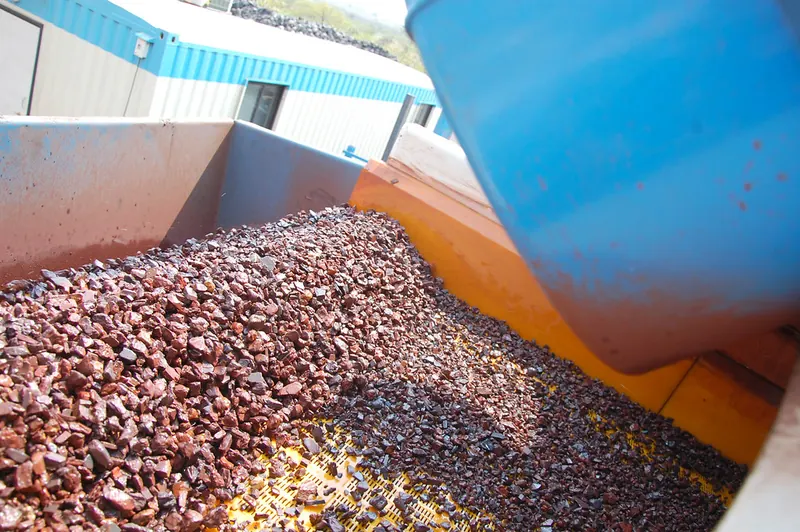
Iron ore is the starting point of almost all steel, but it is not a single product. Depending on how it is mined, crushed and processed, it reaches buyers as fines, lump, concentrate or pellets. Each form suits different furnaces, is priced differently and comes with its own specifications. Knowing the differences avoids buying a product that does not fit the plant.
Four forms of iron ore
- Fines — small particles produced when ore is crushed and screened. They cannot go into a furnace as they are and are first agglomerated, usually by sintering.
- Lump — larger pieces screened from the same ore, which can be charged directly into a blast furnace. Lump is less abundant and usually commands a premium.
- Concentrate — ore that has been ground finely and upgraded, often by magnetic separation, to raise its iron content and remove impurities.
- Pellets — concentrate rolled into small balls with a binder and hardened by firing. They are strong, uniform and the preferred feed for direct-reduction plants.
The specifications that matter
Iron content is the headline figure, but it is only part of the story. Impurities determine how much energy and flux a plant will need and how much slag it will produce, and can affect the quality of the final steel.
- Iron (Fe) content — the higher, the more metal per tonne shipped.
- Silica and alumina — the main gangue minerals, which increase slag volume and energy use.
- Phosphorus and sulphur — harmful to steel quality and kept within tight limits.
- Moisture — affects the weight paid for and, for fine materials, safety at sea.
- Size distribution — the share of particles within the agreed size range.
- For pellets — physical strength, measured by tests such as compression strength and tumble index, so they survive handling without breaking.
How prices are set
International iron ore trade is commonly priced against published indices for a reference grade, with adjustments for the actual iron content and impurities of each cargo. Premiums usually apply to lump and pellets, and to high-grade products that help steelmakers reduce emissions and energy use. Contracts should state clearly which index, which adjustments and which sampling method apply.
Shipping fine materials safely
Fine, moist bulk cargoes can behave like a liquid when a ship rolls at sea, a phenomenon known as liquefaction. Under the International Maritime Solid Bulk Cargoes (IMSBC) Code, iron ore fines are treated as a cargo that may liquefy: their moisture must be tested and shown to be below the transportable moisture limit before loading. Lump and pellets are less exposed to this risk, but moisture and handling still matter.
A buyer's checklist
- Product form and the furnace route it is meant for.
- Typical and guaranteed values for Fe, silica, alumina, phosphorus, sulphur and moisture.
- Size range and, for pellets, strength tests and their limits.
- Pricing basis, adjustments and the sampling and analysis method at loading.
- Moisture certificates and IMSBC Code compliance for fine cargoes.
Nena Steel & Mining works with iron ore, concentrate and pellets from Iran's main mining districts, with specifications, inspection and documentation matched to each buyer's plant.